The Licensing Awards 2026 Finalists

Misirli’s Peter Rabbit Hosiery Range Selected as a Finalist for the Licensing Awards 2026

We’re delighted to announce that our Peter Rabbit hosiery range for Sainsbury’s has been selected as a finalist for Best Licensed Preschool Apparel or Accessories Range (0–5) at the Licensing Awards 2026.

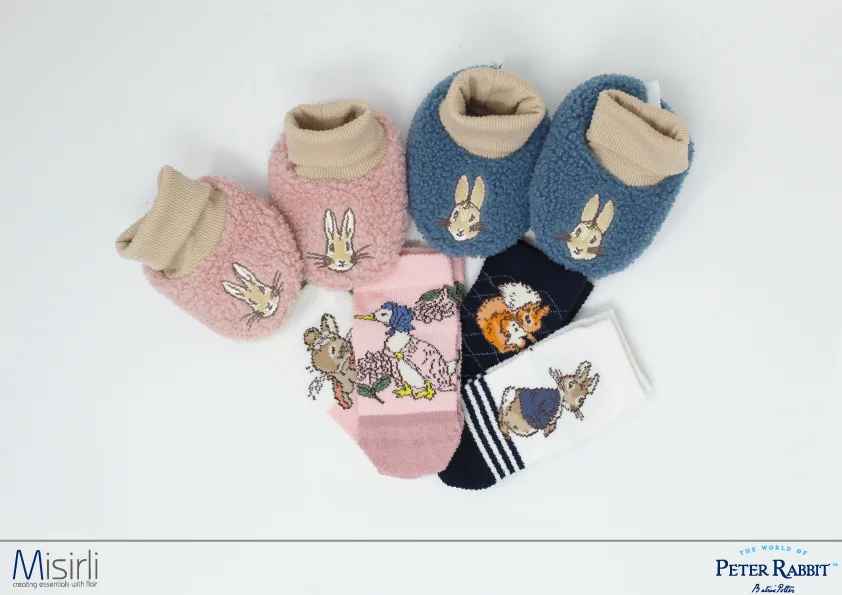
The collection brings the timeless charm of Beatrix Potter’s much-loved characters to a beautifully considered range of baby hosiery, combining classic Peter Rabbit artwork with soft, playful designs made for little ones.

An Achievement for Misirli

Being shortlisted for Best Licensed Preschool Apparel or Accessories Range (0–5) is a fantastic accomplishment for everyone involved, recognising the creativity, attention to detail and collaboration that went into bringing the collection to life.

We’re proud to see our Peter Rabbit hosiery range recognised alongside some of the very best licensed products in the industry and we’re keeping our fingers crossed for the day of the Licensing Awards 2026!

Congratulations to the whole Misirli team and our partners who helped bring this special collection to life.
Celebrating Beatrix Potter in 2026

This recognition feels particularly fitting in 2026, a special year for the Peter Rabbit brand as we celebrate the 160th anniversary of Beatrix Potter’s birth. Born in 1866, Beatrix Potter’s stories, illustrations and much-loved animal characters have continued to inspire generations of children and families.

With Peter Rabbit approaching his 125th anniversary in 2027, the character’s enduring appeal continues to shine, demonstrating just how timeless Beatrix Potter’s original creations remain.

For Misirli, being part of that story through our partnership with Sainsbury’s is something we’re incredibly proud of.

Bringing the World of Peter Rabbit to Life

When designing the collection, our focus was on capturing the gentle, nostalgic feel of the Peter Rabbit brand while creating products that feel fresh and relevant for today’s families.

The range features a combination of soft pink and classic Peter Rabbit blue, with charming character-led designs inspired by the original world of Beatrix Potter. From delicate Peter Rabbit embroidery to playful illustrations of some of his much-loved friends, each style has been designed to feel instantly recognisable while remaining wearable and versatile.

The collection also incorporates a mix of textures, colours and finishes, including cosy sherpa-style baby booties, helping to bring an extra sense of comfort and detail to the range.

Designed for Little Bunnies

For baby and preschool apparel, we know that the smallest details can make the biggest difference. The collection was designed with both functionality and visual appeal in mind, creating pieces that are practical for everyday wear while still offering the character and charm parents love.

The result is a cohesive collection that works across different ages and occasions, with Peter Rabbit and friends appearing across a variety of hosiery styles.

Misirli UK are Hiring!

Misirli UK Limited are hiring!

Due to continued growth, we are looking to recruit an experienced and skilled Account Manager ( Hosiery and Apparel ) with exceptional customer service/key account handling skills.

Working in a team to deliver the highest standard of customer service to some of our Key accounts. The successful candidate will ideally have previous account management experience with a strong supplier background who can demonstrate a track record of building successful relationships, has a passion for product and the ability to maximise sales and recognise potential opportunities with a hands-on approach to all tasks.

Account Manager

In conjunction with the Sales Manager manage all aspects of the business’s Key Retailer Accounts

Overall responsibility for the management of the critical path process, acting as the main point of contact internally and externally working in conjunction with the Merchandising, Technical, Design and In country office teams.

Manage all aspects of the costing process, ensuring that competent costing packs are sent out to the supply base (as per the standard format) and full details of product order requirements are received from the customer.

Take full ownership of the Key account’s departmental product categories and work collaboratively with the buying teams to drive sales growth.

Manage product, pricing and margins according to the agreed aims of the business.

Ensure full understanding of relevant supply base capabilities and limitations including compliance standards and compatibility with customer requirements.

Build strong working relationships with the customer built on results, trust and mutual respect, communicating on a weekly/daily basis where necessary.

Overall responsibility for margin per customer per product order, and in turn the management of any issues that could affect the agreed cost and the business standard required percentage.

Oversee the license approval process in conjunction with the Design and Licensing teams, ensuring all products are approved at all stages of the approval process, and that any requested changes are made and communicated in a timely manner.

Manage any sample costs where necessary, working with the internal teams to ensure sample collections / sales / buying samples are developed and delivered on time to the customer requirements.

Report on any customer initiatives/directives accordingly.

Represent the business in a professional and competent manner at all times.

Travel as and when necessary, in order to manage customer/critical path focuses/comparative shopping and supplier visits.

Responsibility for advising the Commercial Director and Sales Manager of any issues pertaining to the customer, critical path, costings or any other detrimental information.

Key Skills and Attributes:

  • Ability to maximise sales and to recognise potential sales opportunities.
  • Sound understanding of customer specific needs and ability to implement successfully.
  • Highly motivated
  • Effective time management and the ability to work effectively under pressure
  • Excellent communication skills
  • Ability to work proactively and overcome challenges and achieve results
  • Ability to influence and engage key stakeholders
  • Hands on approach to all tasks
  • Sound understanding of supplybase

If you feel you have the skills and experience that we are looking for please send your CV with a covering letter to Emma Vann outlining why you are the right candidate for the role.

How did machines speed up textile manufacturing?

How did machines speed up textile manufacturing?

The textile industry has come a long way since its early days of manual labour and traditional handloom techniques. One of the key turning points in the history of textile manufacturing was the introduction of machines. The advent of machinery revolutionised the industry, propelling it into the modern era of mass production and efficiency. In this blog post, we will explore how machines significantly accelerated the pace of textile manufacturing, leading to increased productivity, lower costs and improved quality.

The Era of Hand Production:

Before machines came into play, textile manufacturing relied heavily on manual labour. Skilled artisans, often working in small-scale cottage industries, would painstakingly weave fabrics using handlooms or engage in labour-intensive processes such as spinning and carding. As demand for textiles grew with the rise of industrialisation, it became clear that a more efficient method was needed.

The Industrial Revolution:

The Industrial Revolution of the 18th and 19th centuries marked a turning point in textile manufacturing. One of the most significant advancements was the invention of mechanised textile machinery. Innovations such as the spinning jenny, water frame and power loom transformed the industry by automating various stages of the production process.

The Spinning Jenny:

Developed by James Hargreaves in the 1760s, the spinning jenny was a game-changer in the textile industry. It enabled a single operator to simultaneously spin multiple threads, increasing productivity by several folds. The spinning jenny was particularly useful for spinning cotton, which was in high demand due to the popularity of cotton fabrics.

The Water Frame:

Invented by Richard Arkwright in the late 1760s, the water frame improved upon the spinning jenny by utilising water power. This invention facilitated the mass production of yarn and allowed for consistent thread quality. The water frame could be operated by unskilled labourers, further increasing efficiency and reducing costs.

The Power Loom:

The power loom, developed by Edmund Cartwright in 1785, revolutionised the weaving process. It automated the repetitive and labour-intensive task of weaving, allowing for faster and more consistent fabric production. The power loom could produce a wider variety of fabrics and patterns, catering to the increasing demand from consumers.

Factory System and Division of Labor:

The introduction of textile machinery also gave rise to the factory system. Large-scale textile mills emerged, housing multiple machines and employing a large workforce. Division of labour became prevalent, with workers specialising in specific tasks, thereby streamlining the production process. This system enabled manufacturers to achieve economies of scale and further enhance productivity.

The Impact of Machines:

The use of machines in textile manufacturing had several profound effects on the industry;

a. Increased Production Capacity: Machines dramatically increased production output, enabling manufacturers to meet the growing demands of an expanding market. The ability to produce textiles in larger quantities contributed to the availability and affordability of clothing and other textile products.

b. Reduced Labor Costs: With the advent of machinery, the need for skilled artisans diminished. Unskilled workers could be trained quickly to operate the machines, resulting in lower labour costs for manufacturers. This, in turn, made textiles more accessible to a wider range of consumers.

c. Improved Efficiency and Quality: Machines brought consistency and precision to the manufacturing process. The uniformity of machine-produced fabrics ensured higher quality standards, reducing variations and defects commonly associated with handcrafted textiles.

d. Technological Advancements: The innovations in textile machinery paved the way for further advancements in manufacturing technologies. Over time, machines evolved, becoming faster, more efficient and capable of handling a broader range of materials.

The introduction of machines into textile manufacturing had a transformative impact on the industry. Through inventions such as the spinning jenny, water frame and power loom, the pace of production increased exponentially, leading to greater output, lower costs and improved product quality. The era of machines revolutionised the textile industry, setting the stage for mass production and industrialisation that characterise modern manufacturing practices.

In need of a new textile manufacturer?

We are renowned for delivering innovative design solutions to UK blue chip High Street retailers and grocers. We are a leading manufacturer and supplier of own brand and licensed character nightwear, underwear, hosiery and socks across men’s, ladies and children’s wear. With the addition of babywear and accessories.

If you would like to become a partner with us and have access to our extensive licenced portfolio, please email us at:

webenquires@misirli.co.uk